
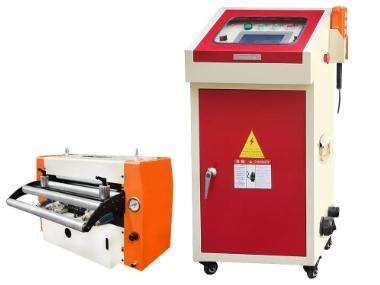
The quality of processed coils and the profitability of production lines in the modern manufacturing environment directly depend on the efficiency of coil processing. With the increasing specifications and speed of throughput required by industries, the technology behind the equipment has to advance. We realize that the key to effective and high-performance coil processing line is its control systems at Shenzhen Lihao Machine Equipment Co., Ltd. The servo feeder control is one of them that cannot be compromised in the quest to have the best of the best in line with the aim of operational excellence.
The Foundation of Uncompromising Precision
The stamping and fabrication business is liquid money. Any millimeter of error during coil material processing may result in incorrectly aligned stampings, higher scrap rates, and expensive reworking. Servo feeder control systems are an alternative to a more traditional mechanical or pneumatic system, which uses digital precision. These feeders are made possible by using the advanced servo motor technology so that the correct length of material is fed into the die each and every cycle. This is a high level of control and not merely regarding tight tolerances, it is one of ensuring that all parts manufactured are the same. In the case of manufacturers, this regularity translates literally into customer satisfaction and the capacity of the manufacturers to undertake more intricate and high value projects without fear of making mistakes in production.
Enhancing Production Speed and Throughput
Speed is a characteristic of competitive market. Yet control of speed is anarchy. The advantage of servo feeders is that the mechanical limitations of the press do not influence the feed length. They are able to make the material speed up and slow down practically immediately enabling the press to run at the fastest speed it can achieve without the feed mechanism having to start up again. This coordination reduces wastage time in the cycle. The outcome is that the number of strokes per minute is greatly increased and this directly increases output. Higher throughput does not only imply that a business will be able to meet bigger orders within a shorter time period which acts as a maximization of return of investment on the whole press line.
Reducing Material Waste and Operational Costs
The greatest cost in metal forming usually is material costs. Poor feeding will reduce quality steel or aluminum to scrap. Servo control is critical in the sense that it reduces wastage. These systems substantially help to eliminate the number of parts that require scraping because of incorrect positioning by making sure that the correct feeding takes place on the first attempt. In addition, the contemporary servo drives are created to be power-friendly where they draw power only when they are in need of movement. The decrease in the quantity of material wastage and energy use reduces the final part cost and makes the manufacturing process more sustainable and cost effective.
Flexibility for Complex and Diverse Production Runs
The contemporary manufacturing world is flexible. Production lines do not spend months working on one part. They are now characterized by short runs and quick changeovers. In this respect, servo feeder controls are essential since they are programmable by nature. The system is able to store hundreds of feed parameters, lengths, and speeds. It is just a matter of memory retrieval of a program to change the job currently being done to the next instead of having to alter the mechanical stops or the cams manually. It provides the manufacturers with digital flexibility and enables them to adjust to changes in the market quickly and operate smaller batches at low costs, which is crucial to maintaining competitiveness.
Ensuring Consistent Product Quality
Quality control is an ongoing issue during the production process. Perturbations in feeding may cause stress or misalignment to the material before it is even fed into the die. Servo feeders offer a soft but firm grip and a motion profile which is perfectly controlled. This will eliminate the process of marking material and the surface of the material and its flatteness will remain intact. Consistency in the stamping process is exhibited when there is consistency in the feed. Such a quality assurance ensures that manufacturers can adopt quality assurance measures with ease knowing that the major cause of most defects; inconsistent feeding has been eliminated.
The Long-Term Value of Intelligent Control Systems
A coil processing line is an important capital choice. Such criticality of servo feeder control is also carried down to the life and viability of the equipment. There are reduced mechanical components in servo-driven systems, which wear out as opposed to clutch-brake or air-driven feeders. They have self-diagnostic features and they inform the operator about the possible problems before they lead to a failure. This predictive maintenance will remove unexpected downtime as a significant unseen expense in the manufacturing process. When purchasing equipment of Shenzhen Lihao Machine Equipment Co., Ltd. under conditions of highly-developed servo control is important the business is not only purchasing a machine, but they are insuring themselves a high-quality, long-term production tool, which will safeguard the functioning workflow.
Conclusion
Finally, servo feeder control is not just an option of modern coil processing equipment, it is the key which determines its ability. This technology has a direct impact on the bottom line, whether through the highest degree of precision and speed or the possibility to be flexible and minimise waste. The intelligent, responsive feed control will become increasingly and increasingly significant as manufacturing becomes more and more advanced. In businesses that need to take their stamping operations to the next level, the quality of the servo feed system is the initial perspective of attaining the world-class standards of production.