
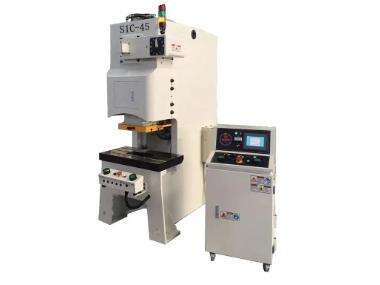
Speed, precision and consistency in high volume production is the ultimate goal of production in a competitive world of modern manufacturing. In the case of automotive and electronic industries, among other industries, the stamping equipment selection has a direct influence on profitability and market responsiveness. It is the reason why progressive stamping machines, and the automated step-saving of which they are accompanied have become the unquestioned champions of the mass production floor. We have witnessed the impact of this technology in conjunction with the strong support at the Shenzhen Lihao Machine Equipment Co., Ltd. has on the manufacturing process.
Unmatched Efficiency and Throughput for Mass Manufacturing
The main benefit of a progressive stamping line is that the machine can repeat operations within one of the continuous cycles. A progressive stamping machine is a single step paradigm in contrast to manual processes or single stage processes which have to handle the part in between steps; with the progressive stamping machine, feeding, straightening, and stamping are incorporated into a continuous workflow. With a high-precision servo feeder pushing a coil of material, it is moved through a series of stations inside the die and comes out the end of the line as a complete part in seconds.
In the case of manufacturers, it directly translates to extremely increased throughput. Not only does the removal of intermediate handling increase the pace of production, but also allows lights-out, unmanned running on long production lines. Such productivity is needed to satisfy the insatiable requirements of large volume orders with labor costs per part being amazingly low. We have developed the integrated 3-in-1 feeders and NC servo systems that are specifically designed to support this continuous and high-speed rhythm without shortcutting on the accuracy.
Consistent Quality and Reduced Waste in Every Cycle
When production is on a large scale, any slight variance can lead to thousands of bad parts and a lot of wasted materials. This environment is dominated by progressive stamping machines as they are designed to be repeatable at all times. The inflexible structure of the press, which is coupled with the use of precise material regulation by a decoiler cum straightener, makes each stroke the same as the previous one.
This stability is imperative in preserving of tight tolerances of complex parts. In addition to this, contemporary servo-driven machines provide superior control of the stamping rate and slide movement. This enables manufacturers to optimize the forming of certain materials and helps in minimizing the stress levels and eliminating the occurrence of defects such as cracking or tearing. Through reduced set ups and scrap, which is one of the primary promises of our strong tooling design, companies will be able to obtain high material yield and provide their clients with high quality even within the most restricting schedules.
Tailored Automation for Diverse Production Needs
There is no pair of high volume manufacturing challenges, which are similar. A generalized press line, which is one size fits all, is in most cases not sufficient to optimize a given production process. Progressive stamping is actually the most dominant when the equipment can be effectively customized to the application. This implies the ability to be flexible to setup a line capable of accommodating specific material widths, thicknesses and complexities of parts.
Lihao strategy is to offer personalized equipment solutions. Our participation in technical negotiations with our clients allows us to go beyond the ordinary specifications. It could be an exclusive weldment design of the machine frame or a bespoke control system to a particular die, but the flexibility of the core technology the feeder, the straightener, and the press, will make sure that the production line will fit into the pre-existing workflow of the customer and its future product target. This co-creation of value is a competitive edge that industrial equipment cannot keep pace with.
The Backbone of Continuous Operation: Reliability and Support
Mass production is ruthless when it comes to time. A failed press line may stop production of a whole factory which results to the loss of deadlines and loss of money. Hence, the support system and reliability of the equipment is as significant as the technical specification of the machine. The machine should be progressive stampers that have high quality components and strong construction to withstand 24 hours of use.
Nonetheless, even the most robust kind of machines need maintenance and support sometimes. This is where the after sales service is an important aspect that comes out in depth. The awareness that spares are easily accessible and that the services of experts can be reached by making a simple call gives manufacturers the confidence to operate their lines to the maximum capacity. When the parts which are critical in the process are manufactured in-house as is the case with our equipment, it ensures that not only the initial quality is met but also long term management of the supply of the spare parts. That is why you can always rely on them to act as a stable ally, such that your production hegemony is never harmed by sudden disruptions.
Summary
Finally, progressive stamping machines dominate the high-volume production, which is established on the basis of speed, accuracy, flexibility, and unremitting conditions. They are not merely some pieces of machinery; these are unified solutions that aim at maximizing the output and reducing the waste as well as making sure that they operate continuously and in a reliable fashion. In other firms such as Shenzhen Lihao Machine Equipment Co., Ltd., we are the ones who will design and support such systems, which will enable our clients to reach new heights of manufacturing perfection and stay competitive in a rapidly changing global environment.