

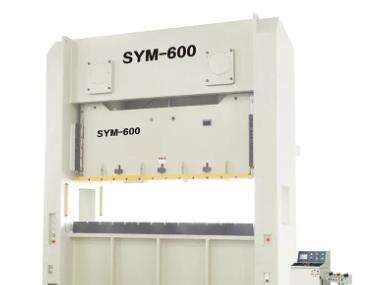
The need to produce high volume intricate steel parts has never been as high in the contemporary manufacturing environment. The automotive industry and other companies like the electronic industry depend on the reliability and speed of progressive stamping. The key question in this manufacturing efficiency is the most critical one; what is the true meaning of precision in these sophisticated machine systems? Precision is not a specification to a company such as Shenzhen Lihao Machine Equipment Co., Ltd. it is the main philosophy under which the engineering, production and customer satisfaction are based. This definition is important to any manufacturer that wants to streamline his production line and have a competitive advantage.
The Holistic Design of the Mechanical Framework
With a progressive stamping system the accuracy start long before the initial stamp is made; it starts with the inherent stability of the machine structure. The mechanical structure should serve as an uncompromising support against dynamic forces to absorb vibrations and remove the interference of vibrations. The tolerances of even a microscopic flexing of the frame when a machine is running at full speed can be converted into large deviations on the finished part. Thus, the blend of a firm and tensioned bed and strong guiding parts is the most essential. Shenzhen Lihao Machine Equipment Co., Ltd. pays great attention to this structural integrity so that the slide parallelism and the perpendicularity of the slide and the bed are maintained at full load condition. This mechanical harmony is to insure that all the stations in the progressive die are in unity so that the material may pass through each station in the sequence with the most perfect precision.
Advanced Control Systems and Real-Time Feedback
Although the physical set up offers the stability, the capacity to adapt and correct is determined by the brain of the operation. The level of sophistication of control system and ability to follow it real-time define modern precision to a large extent. A really accurate system uses high-resolution encoders and programmable logic controllers to control all the processes of the stroke, including velocity and bottom-dead-center positioning. This high degree of control enables operators to adjust the ram speed to fit the unique material properties and die needs to the extent necessary to minimize shock and enhance the quality of parts. Moreover, built-in sensors will give real-time information on essential parameters, and the system will alert the operator immediately about deviants like incorrect material feeds or deviant tonnages peaks. This closed loop system is that which makes precision a state of being rather than a fixed state but one which is maintained dynamically over the whole run of production.
The Critical Role of Feeding Accuracy and Synchronization
Progressive stamping system can never be accurate until it can transfer material at one station to the next accurately. The feeder mechanism should work with the press stroke in flawless coordination to position the required material at the right time and with the appropriate length. Even the smallest desynchronization will cause cumulative errors that will destroy the component and could be damaging the costly progressive die. Precision in this case is characterized by the servo-driven feeding systems which provide unmatched ability in controlling the acceleration, deceleration and feed length. The system ensures that every progressive station operates on the right area of the workpiece by keeping the pitch of the material accurate by the standards of microns. This smooth correlation of feed, press and die are what turn a sequence of separate operations into one, unified and very precise production process.
Long-Term Reliability and Maintainability of Tolerances
Lastly, the most valid definition of precision in a machine system is that it can maintain tolerances as time passes and in unlimited repetitions. An accurate machine that will produce flawless parts on day one but loses its calibration in a few days cannot be said to be really precise. High-quality long-lasting accuracy is an output of high materials, powerful lubrication systems and clever thermal management. During the process of machine operation, the heat produced due to friction and metal deformation may cause component expansion, which changes important clearances. Precision systems are designed with mitigation of these thermal effects, regardless of whether the system is robustly designed with minimized heat-generation or cooled to remain thermally stable. Shenzhen Lihao machine equipment Co., Ltd. realizes that downtime in the name of recalibration is expensive to the manufacturer. Thus, the stability of parts and the simplicity of preserving initial factory tolerances will be determining characteristics of the overall accuracy and value of a system throughout its service life.