

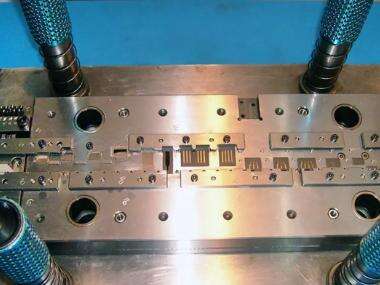
In the context of contemporary production, the distinction between a successful production cycle and an expensive failure is frequently found in the minute aspects. In the case of businesses that depend on metal components, the stamping die qualifies as the building block on which the consistency of the products is anchored. In Shenzhen Lihao Machine Equipment Co., Ltd. we know that manufacturing tolerances are not merely figures in a blue print, they are the soul of precision engineering. This paper will discuss how these tolerances are crucial in the manufacture of stamping dies and why these tolerances are important to your business success.
The Critical Importance of Tight Tolerances in Die Manufacturing
When we are referring to the manufacturing tolerances in the production of precision stamping dies we are really referring to the permissible range of variation in the physical dimensions of the die. In the case of stamping die, which requires a great deal of force and high cycles, the simplest deviation can result in very serious difficulties. Close tolerances are used to ensure that all parts of the die are the same as the last, provide interchangeability in parts, and efficiency of an assembly line. When a die has loose or uneven tolerances, stamped components will be susceptible to burrs, incorrect bends or inappropriate fits, and high scrap rate and high production costs will be experienced. In Shenzhen Lihao we attach great importance to these high standards since we are certain that when our die is tolerated so well it will be directly translated into an easier and more lucrative manufacturing procedure with our clients.
How Precision Tolerances Influence Production Efficiency and Cost
There is a direct correlation between the die tolerances and the cost of production in general that is underrated. A die that has been produced with great precision will be able to be pressed many millions of times without much variation. This stability minimizes machine haltages to make changes or repairs. During the case of a loose die, operators are almost always adjusting the press settings to counter part variations, which is a waste of time and material. Moreover, high precision dies wear with less variation. Within a high level of tolerances, the force distribution in the stamping operation is even and no part of the tool is prematurely worn. This is the life cycle, the cost of the initial investment in a high-tolerance die may be greater, but overall cost of ownership throughout the life of the die is significantly reduced, something we believe in our production philosophy.
The Role of Advanced Machinery in Achieving Consistent Tolerances
Repeatable and microscopic tolerances cannot be attained without the aid of state-of-the-art technology. It involves a combination of expert crafts with the latest machining tools. At our plant we have high-precision grinding, CNC machining, and wire-cut EDM, and as a result, all of our cavities, punches and guide components are produced to meet the most rigid dimensional specifications. The tolerances discussion is not only concerning the ultimate measure, but it concerns the ability of the equipment to retain the measures over a complicated geometry. These factors include the inflexibility of the machine tool, the accuracy of the servo motors, and the accuracy of the measurement systems. Our investment in state-of-the-art manufacturing technology ensures that there is no guesswork and human error, and the dies will work as designed upon the first hit, to the final one.
Quality Assurance as the Backbone of Precision Manufacturing
A paper tolerance is just an objective until it is confirmed through a strict quality assurance measure. During the manufacturing of precision stamping dies, inspection plays a potential role as machining. We use an elaborate inspection procedure that involves the use of coordinate measuring machines and optical comparators to ensure that all critical dimensions are within the required range. This is not a final stop but a combined aspect of our working procedure. Through the process of feature measurement, we will be able to make real time changes and therefore the final product will be of maximum standards. This verification promise will give our clients the assurance that the tooling they get will fit perfectly in their production lines, and they will not have to incur undue delays as they receive parts that are precisely what they required.
Conclusion
The competitive world of manufacturing is such that the quality of your tooling becomes the maximum production potential. One of the major indicators of that quality is the manufacturing tolerances in the production of precision stamping dies. They influence the consistency of parts and loss of material, machine uptime and profitability. In Shenzhen Lihao Machine Equipment Co. Ltd., we are committed to tight tolerances and highly developed quality control in commitment to our partners. It is not merely that we construct dies but we design solutions that make your manufacturing processes run as efficiently and reliably as those tools that we produce, so that your business can be as smooth and accurate as those tools.