
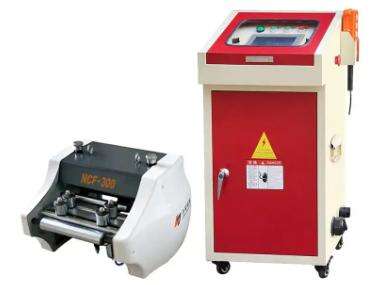
With its fast changing manufacturing environment, power press automation is one of the keystones of high-volume manufacturing of metal stamping and forming. The drivers of these automated lines are becoming the most important as industries require more speed, precision, and flexibility. The servo feeder machine is one of them that have become an inseparable component. In the Shenzhen Lihao Machine Equipment Co., Ltd., we have experienced ourselves the impact of the enhanced servo feeding technology in stamping processes where they are not seen to be the traditional stamping process but rather the smart yet efficient production cells. The importance of the servo feeders is one of the processes which should be understood by every manufacturer that wants to stay competitive in our modern world.
Enhanced Precision and Consistency
The greatest input of servo feeder machines is that they can provide unmatched precision in the material progression. In comparison with conventional mechanical feeders, in which clutches, brakes, or pneumatic systems control the movements of the coil stock, servo-controlled feeders apply a digital control to all movements of the coil stock. This closed-loop process constantly measures and varies the amount of feed to the work environment, removing the cumulative errors that are frequent in the older technology. To manufacturers, this will mean that they will always have extremely accurate parts, less scrap rate, and the ability to operate complex progressive dies that require extremely high tolerances. Where a millimeter matters, the repeatability provided by servo feeders gives the first part to come out of the press as good as the thousandth, a repeatability that results in confidence in the customer and brand loyalty.
Increased Production Efficiency and Throughput
Time is money and in a world that values time, quickness and responsiveness of servo feeders straight to the bottom line. The machines can both increase and decrease the speed of the material at virtually no time, and the press is still able to run at the full rated speed without sacrificing feed accuracy. Removal of mechanical linkages and a decrease in the number of moving components imply fewer inertia to overcome and therefore faster start-stop cycles and shorter transition time between strokes. In addition, servo feeders significantly lower the setup and changeover times. The control system allows the operators to save dozens of job parameters and retrieve them at a few keystrokes saving significant downtime between product changes. This flexibility allows manufacturers to operate smaller batches at low cost, react more quickly to market changes, and eventually make the stamping lines more effective in general.
Flexibility and Adaptability in Manufacturing
In contemporary productions, variety and change are features. The dynamic environment thrives well with servo feeder machines since they are flexible in nature. The fact that servo drives are programmable also means that it can manage many different material widths, thicknesses and feed pitches without having to be mechanically modified. The servo feeder can be adjusted to provide only the appropriate force and motion profile whether the part is the fragile aluminum of electronic components or the high-strength steel of automotive components. This flexibility is applied to the press line in general; servo feeders can coordinate with any type of press, feed orientation and downstream equipment like straighteners and recoilers. This enables the manufacturers to stay ahead of time by selecting a customer-trusted partner, such as Shenzhen Lihao Machine Equipment Co., Ltd., and the company will not need to affix its investments on automation as long as the products are changing.
Energy Efficiency and Cost Reduction
In addition to performance benefits, servo feeders would also be very beneficial in terms of sustainability and operational economy. Due to its ability to only consume power during movement, the servo motors save on constant energy usage as opposed to older systems which operate continuously. Many servo drives also use regenerative braking to capture and reuse the energy during deceleration, lowering the cost of electricity further. Moreover, the mechanical design is simplified with the result of fewer gears, fewer clutches and fewer brakes, the result of which is reduced maintenance cost and increased machine life. Air cylinders do not leak, friction clutches do not wear out and fewer spare parts are to be stocked. These savings add up over the life of a stamping press and in the end the overall cost of owning a servo-equipped line is significantly lower than that of a traditional configuration. In companies that believe in the green manufacturing, the lower power consumption rate of servo feeders is the extra perk that fits the corporate environmental objectives.
To sum up, the servo feeder machine is much more than an adjunct of a power press; it is the core of the contemporary stamping automation. It provides accuracy, speed, agility, efficiency and intelligent connectivity that enable manufacturers to achieve the highest level of quality and productivity. To the organizations that are willing to take their pressroom to a new level, spending money on high-quality servo feeding technology will be the move that will pay back in terms of competitiveness and overall success in the long run.